Introduction
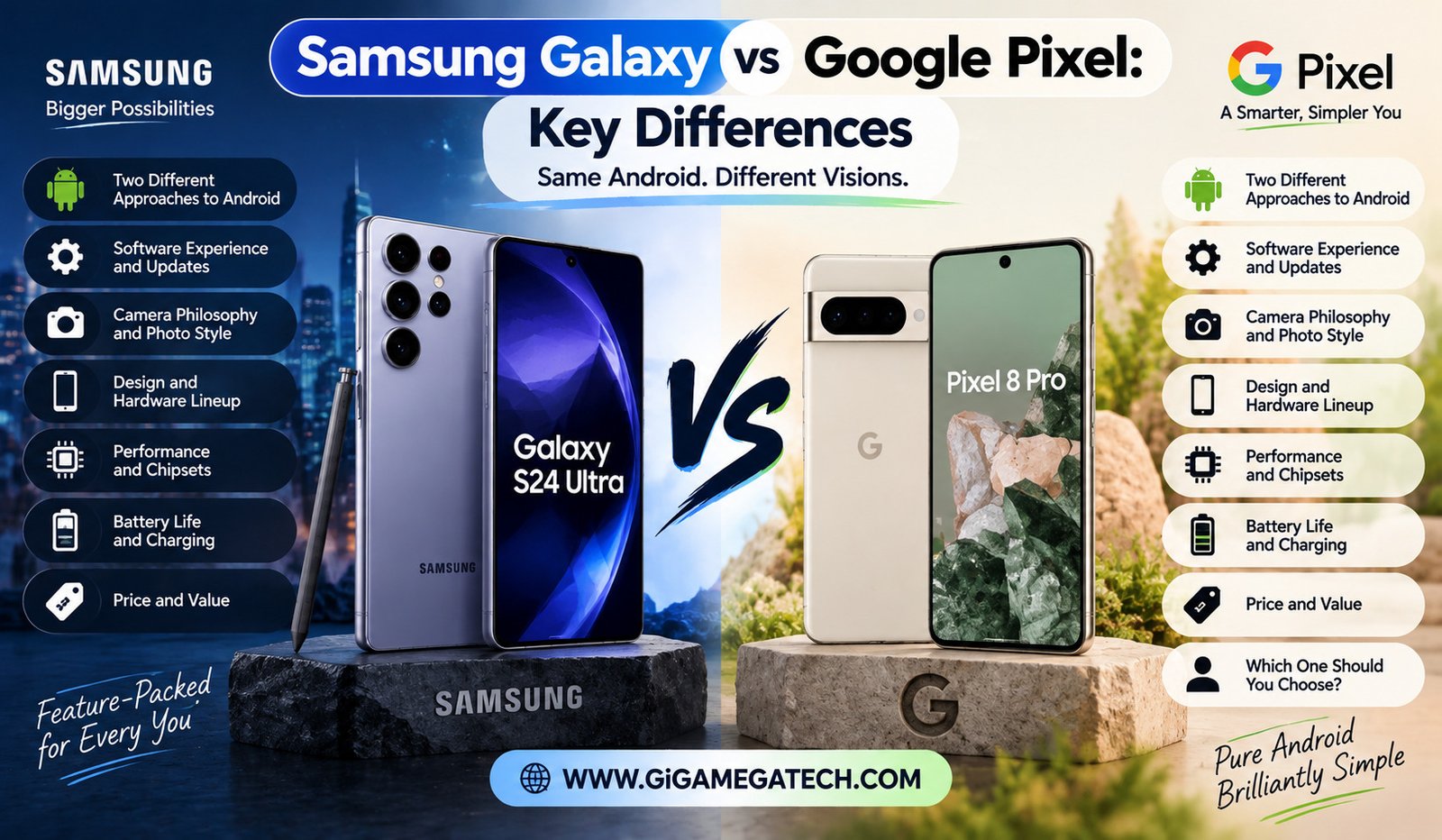
Choosing between Samsung Galaxy vs Google Pixel often comes down to more than specs on a page. Both run Android, yet each brand shapes the experience in a distinctly different direction.
Samsung leans into customization and hardware variety, while Google focuses on a clean software experience and camera processing. This guide breaks down the key differences to help you decide which fits your habits better.
Two Different Approaches to Android
Samsung and Google both build phones on Android, but the similarities mostly end there. Each company applies its own software layer and design philosophy on top.
Samsung uses One UI, a heavily customized version of Android packed with extra features and settings. Google Pixel phones run a closer version of stock Android, with fewer visual changes.
Understanding this difference matters, since it affects how the phone looks and feels, not just which specs appear on a comparison chart.
Software Experience and Updates
Google Pixel phones typically receive new Android versions and security updates first, since Google develops Android itself.
Samsung has narrowed this gap significantly in recent years, offering long-term software support on many of its newer Galaxy models as well.
The bigger difference lies in software philosophy. One UI includes more built-in customization tools, while Pixel’s software stays closer to a minimal, stock Android layout.
Key differences
- Pixel offers a cleaner, less cluttered interface out of the box
- Samsung includes more built-in apps and customization options
- Both brands now offer extended software update commitments
Camera Philosophy and Photo Style
Google Pixel phones are widely known for computational photography, using software processing heavily to enhance photos rather than relying only on hardware.
Samsung Galaxy phones, particularly higher-end models, often include more physical camera lenses and hardware-focused features like extended zoom ranges.
The practical difference tends to show up in photo style. Pixel photos often look more natural and true to the original scene, while Samsung photos often appear more vivid and saturated by default.
Key differences
- Pixel emphasizes computational processing over raw hardware specs
- Samsung often includes more lenses and greater zoom range on flagship models
- Photo color tuning differs noticeably between the two brands
Design and Hardware Lineup
Samsung offers a much wider range of phone models, spanning budget options, mid-range devices, and multiple flagship tiers, including foldable phones.
Google’s Pixel lineup stays comparatively smaller, generally offering a standard model, a Pro model, and occasionally a budget-focused option.
This difference in variety affects choice and flexibility. Samsung gives buyers more price points and form factors to pick from, while Pixel keeps things simpler.
Key differences
- Samsung includes foldable phone options within its lineup
- Pixel’s lineup stays smaller and more focused
- Samsung offers more S Pen-compatible devices for note-taking and sketching
Performance and Chipsets
Samsung’s flagship phones often use either its own Exynos chipsets or Qualcomm Snapdragon chips, depending on the specific region and model.
Google Pixel phones use Google’s own Tensor chipset, designed with a focus on supporting on-device machine learning features, like live translation and photo processing.
This difference in approach means comparisons are not entirely apples to apples, since each chip prioritizes different strengths rather than raw benchmark performance alone.
Key differences
- Samsung’s chip choice can vary by region and model
- Pixel’s Tensor chip focuses heavily on AI and machine learning tasks
- Real-world performance depends on the specific task being compared
Battery Life and Charging
Battery life varies significantly across specific models on both sides, making broad brand-wide claims difficult to state accurately.
Samsung’s flagship phones have generally supported faster wired charging speeds compared to Google’s Pixel lineup in recent years.
Both brands support wireless charging on their higher-end models, along with battery health management features aimed at slowing long-term battery degradation.
Key differences
- Charging speed tends to favor Samsung’s flagship models
- Both brands offer wireless charging on premium devices
- Actual battery life depends heavily on the specific model and usage pattern
Price and Value
Samsung’s wide lineup means pricing spans a large range, from budget-friendly A-series phones to expensive foldable flagships.
Google Pixel pricing tends to sit in a narrower band, generally positioning its phones as strong value options within the flagship or near-flagship category.
Deciding on value for money depends heavily on which specific models you compare, since both brands offer strong options at different price points.
Key differences
- Samsung offers more budget and mid-range choices overall
- Pixel phones often get praised for value within the flagship tier
- Regional pricing and availability can shift the comparison significantly
Which One Should You Choose
If you want a clean, simple software experience with strong computational photography, Google Pixel tends to fit that preference well.
If you want more hardware variety, deeper customization options, and features like S Pen support or foldable designs, Samsung Galaxy offers more flexibility.
Neither brand is a clearly better choice overall. The right pick depends on which specific priorities, whether camera style, customization, or hardware variety, matter most to you.
Key Takeaways
- Best for clean software: Google Pixel, staying closer to stock Android
- Best for computational photography: Google Pixel, known for natural-looking photos
- Best for hardware variety: Samsung Galaxy, including foldables and S Pen models
- Best for customization: Samsung Galaxy, through One UI’s deeper settings
- Best for charging speed: Samsung Galaxy, generally supporting faster wired charging
- Best for simplicity: Google Pixel, with a smaller, more focused lineup
FAQs
Does Samsung or Google Pixel get software updates faster?
Google Pixel phones typically receive new Android versions first, since Google develops Android directly.
Which brand takes better photos?
It depends on preference, since Pixel favors natural-looking photos while Samsung favors more vivid, saturated tones.
Does Samsung offer foldable phones while Pixel does not?
Samsung offers multiple foldable phone models, while Google has a more limited foldable lineup in comparison.
Is one brand generally cheaper than the other?
Samsung offers a wider range of prices overall, though specific model comparisons vary by region.
Can I use an S Pen with a Google Pixel phone?
No, S Pen support is a Samsung-specific feature tied to select Galaxy devices.
Conclusion
Comparing Samsung Galaxy vs Google Pixel comes down to differing priorities rather than one brand being objectively better. Pixel offers cleaner software and strong computational photography, while Samsung offers greater hardware variety, deeper customization, and features like S Pen support and foldable designs. Consider which of these priorities matters most to your daily use before making a final decision.