
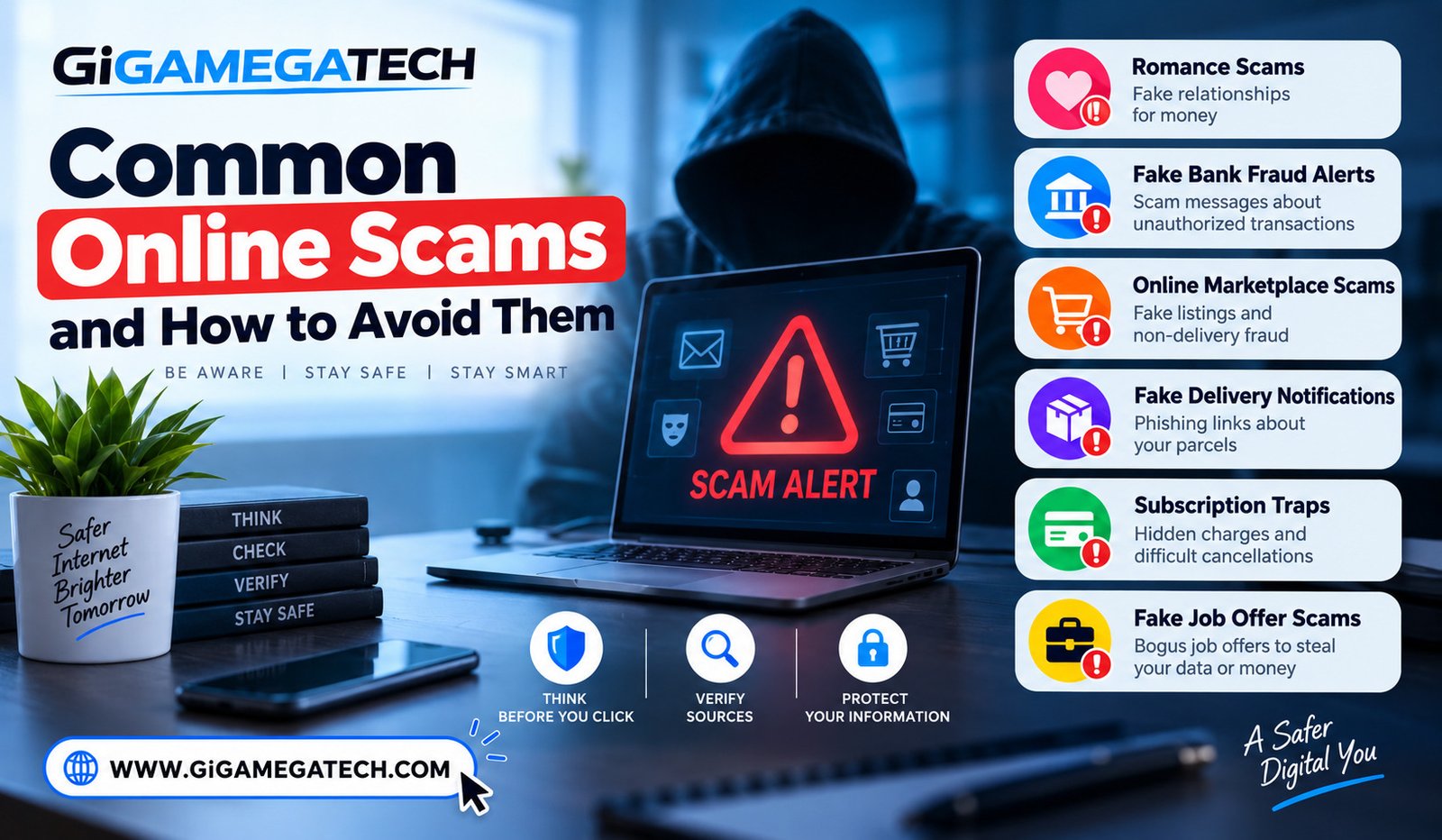
Scammers do not need to be clever to succeed. They only need one distracted moment where you click a link or share information without thinking twice. Understanding common online scams and how to avoid them gives you the pattern recognition needed to catch a scam before it costs you money or personal data. This guide covers seven scams that show up constantly, along with practical ways to protect yourself against each one.
Reported losses to online scams have climbed sharply in recent years, and the tactics keep evolving. Most of these schemes rely on urgency, fear, or trust rather than technical trickery, which means awareness alone blocks a large share of attempts.
Phishing Emails and Text Messages
Phishing remains one of the most common scams because it works across nearly every platform, from email to text messages to social media.
How Phishing Usually Works
- A message claims to be from your bank, a delivery company, or a familiar service
- It urges you to click a link and “verify” your account or personal information
- The linked page looks nearly identical to the real website
How to Protect Yourself
- Hover over links to preview the actual destination before clicking
- Check the sender’s email address closely for small misspellings
- Go directly to the official website or app instead of clicking a link in the message
- Turn on two-factor authentication so a stolen password alone is not enough
Romance Scams
Romance scams build trust over weeks or months before asking for money, which makes them especially damaging both financially and emotionally.
Common Warning Signs
- A new online relationship that moves toward affection unusually fast
- The other person avoids video calls or meeting in person
- Eventually, they request money, gift cards, or help with an “emergency”
How to Stay Safe
- Be cautious with relationships that exist entirely online
- Never send money or gift cards to someone you have not met in person
- Talk to a trusted friend or family member before sending funds to a new online contact
- Search a profile photo online to check whether it appears elsewhere under a different name
Fake Bank Fraud Alerts
Scammers impersonate banks through calls or texts, warning of suspicious activity to pressure victims into acting quickly without thinking.
What These Scams Usually Ask For
- Your online banking password or full debit card PIN
- A one-time passcode sent to your phone
- Instructions to move money to a so-called “safe account”
How to Avoid Falling For It
- Remember that legitimate banks will never ask for your password or a one-time code
- Hang up and call your bank directly using the number on your card or statement
- Never move money based on instructions from an unexpected caller or text
- Treat urgency and pressure as a red flag, not a reason to act faster
Online Marketplace Scams
Buying and selling through online marketplaces creates opportunities for fake listings, non-existent products, and deposit scams.
Typical Tactics
- Listings priced well below market value to create urgency
- Requests for payment through untraceable methods like wire transfers or gift cards
- Sellers who push buyers to complete a deal quickly, outside the platform’s protections
Safer Shopping Habits
- Use payment methods that offer buyer protection instead of gift cards or wire transfers
- Meet in person for local sales, in a public location when possible
- Verify a seller’s history and reviews before sending any payment
- Be skeptical of deals that seem far better than anything else available
Fake Delivery Notifications
With so many packages moving through delivery services, a fake shipping notification blends in easily among real ones.
How the Scam Plays Out
- A text or email claims there is a problem with a package delivery
- The link leads to a page that closely resembles a real logistics company’s website
- Victims are asked to pay a small fee or enter payment details to “release” the package
How to Spot and Avoid It
- Go directly to the shipping company’s official website or app instead of clicking the link
- Ignore delivery messages from senders or numbers you do not recognize
- Never enter card details on a page you reached through an unexpected text or email
Subscription Traps
Subscription traps have become increasingly common in mobile apps, where a free trial quietly turns into a recurring charge.
How These Traps Work
- An app or service advertises a free trial with minimal upfront information
- The terms buried in fine print include automatic billing after the trial ends
- Cancelling often requires navigating a deliberately confusing process
How to Protect Your Wallet
- Read the terms before starting any free trial, especially around billing dates
- Set a personal reminder before a trial period ends
- Check your bank or card statements regularly for unexpected recurring charges
- Use a virtual card with a spending limit for trial sign-ups when possible
Fake Job Offer Scams
Job scams target people actively searching for work, often through unsolicited messages promising easy pay for minimal effort.
Common Red Flags
- An unexpected text or email offering a job you never applied for
- Requests for personal information or payment before any real interview process
- Vague job descriptions paired with unusually high pay for simple tasks
How to Avoid Job Scams
- Apply directly through a company’s official careers page or a reputable job site
- Avoid engaging with anonymous recruiting texts sent to multiple numbers at once
- Never pay money upfront for training, equipment, or background checks
- Verify a company’s legitimacy through an independent search before sharing any details
Key Takeaways
- Phishing: Verify links and sender details before clicking anything in an unexpected message.
- Romance scams: Never send money to someone you have not met in person.
- Fake bank alerts: Legitimate banks never ask for passwords or one-time codes.
- Marketplace scams: Avoid gift cards and wire transfers when buying or selling online.
- Fake deliveries: Go directly to the shipping company’s site instead of clicking a link.
- Subscription traps: Read trial terms closely and track billing dates.
- Job scams: Apply only through official company channels, never pay money upfront.
Frequently Asked Questions
What should I do if I already clicked a suspicious link?
Change your passwords immediately for any related accounts and monitor your financial statements closely for unusual activity.
Are scams more common on certain platforms than others?
No single platform is immune, though scammers often follow wherever people spend the most time, from email to social media to text messages.
Can two-factor authentication fully protect me from scams?
No, but it adds a strong extra layer of protection, since a stolen password alone will not grant full account access.
Is it safe to give my phone number to online sellers or job recruiters?
It is safer to keep personal contact details limited until you have verified the legitimacy of the seller or employer.
Should I report a scam even if I did not lose money?
Yes, reporting attempted scams helps authorities and platforms track patterns and warn others.
Conclusion
Common online scams and how to avoid them mostly comes down to slowing down before you act. Scammers rely on urgency, fear, and trust to short-circuit careful thinking, so pausing to verify a message through an official channel blocks the majority of these attempts. Stay alert to the patterns covered here, and you will catch most scams before they ever have a chance to cost you anything